

European Car Electronics Upgrade: A Practical Guide to Modernizing Your Vehicle
What if the newest-looking screen is the wrong upgrade for your car? A European car electronics upgrade should start with the vehicle’s factory systems, the component’s fitment, and the function you want, not a feature list alone. Even a well-equipped replacement can disappoint if it doesn’t work with the car’s existing controls or display.
It’s reasonable to want modern convenience while preserving the systems that make an Audi, Volkswagen, Porsche, or BMW feel cohesive. The challenge is deciding whether a replacement, retrofit, or accessory suits your goal, and which vehicle details matter before you choose.
This guide explains the main upgrade categories and the compatibility questions to consider, including factory integration, model and configuration, and intended use. You’ll also find a practical starting point for exploring entertainment electronics and related upgrades for European vehicles. Bayern Automotive supplies genuine OEM components and premium aftermarket parts for these marques, including entertainment electronics.
Key Takeaways
- Decide whether you want to add a function or replace a component that is failing before comparing options.
- Consider how the display, controls, audio components, and wiring work together within the factory system.
- Compare replacement, retrofit-interface, and accessory approaches by purpose and integration needs.
- For a European car electronics upgrade, record the make, model, year, trim, and existing electronics configuration before narrowing component choices.
- Use your intended function and fitment details to explore entertainment electronics for Audi, Volkswagen, Porsche, and BMW vehicles.
Why Consider a European Car Electronics Upgrade?
Drivers’ expectations for connectivity and in-car entertainment change over time. A factory system that once handled everyday listening may no longer suit how you use your vehicle. A component that has begun to fail may also need attention, but for a different reason. Separating these goals is the first step toward choosing an upgrade that addresses the actual need.
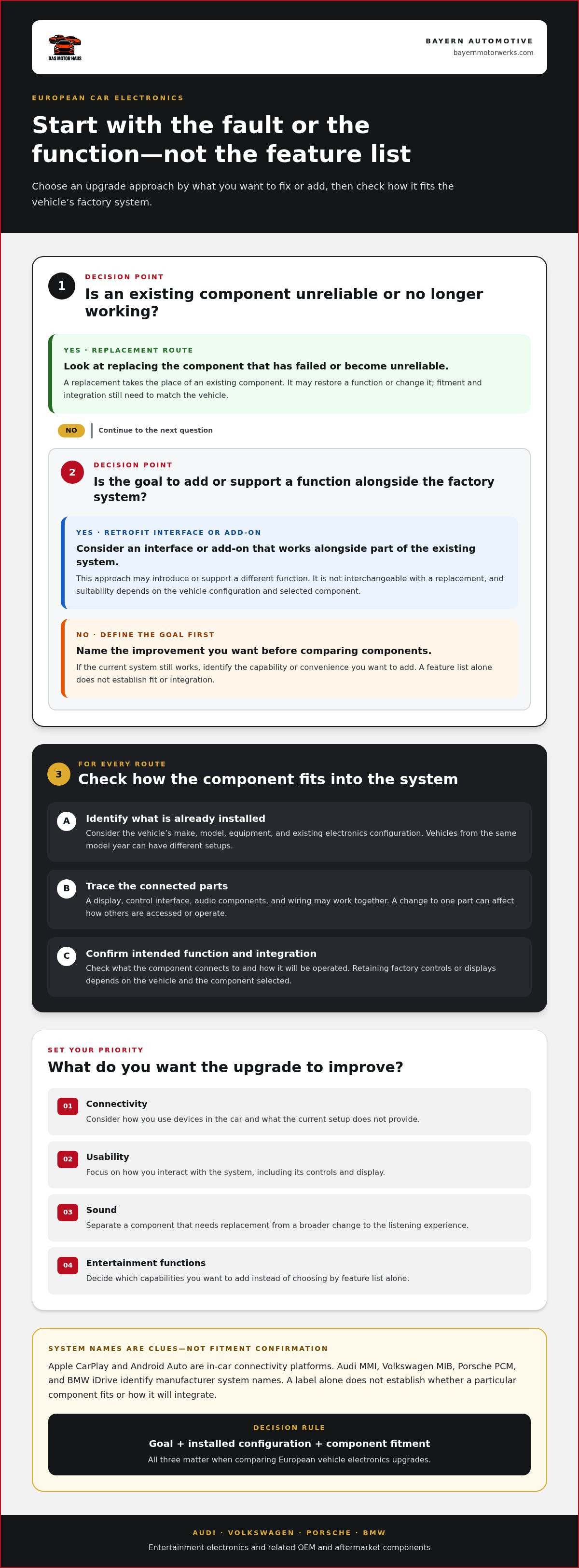
An upgrade intended to add a function starts with something the vehicle doesn’t currently do, or a capability you want to access more conveniently. A repair-minded replacement, by contrast, restores a function that has become unreliable or stopped working. The distinction matters because adding a component and replacing an existing one can involve different fitment and integration considerations.
An electronics upgrade adds or restores a chosen function while accounting for how the component fits and works with the vehicle’s existing systems. Vehicle age alone doesn’t tell you which option is suitable. Two vehicles from the same model year can have different equipment or system configurations, so the installed setup matters alongside the result you want.
Which parts of a vehicle count as electronics?
For an entertainment-focused upgrade, consider the infotainment system, audio components, displays, and electronic accessories as distinct but potentially connected areas. A display presents information, while the control interface provides a way to operate functions. Audio components handle sound. Depending on the vehicle, these elements may work together through shared wiring and factory controls. Equipment and system architecture vary by model and configuration. For broader context on the range of systems involved, see the Automotive Electronics Overview.
This distinction helps define the scope of a project. A change to one part of an entertainment system may affect how it interacts with another, so choosing by appearance or a desired feature alone can leave important integration questions unanswered. Bayern Automotive’s entertainment electronics category gives European vehicle owners a relevant place to explore components for this type of upgrade.
What drivers commonly want an upgrade to improve
Most goals fit into a few practical areas. Naming your priority makes it easier to compare component types without assuming every upgrade delivers the same result.
- Connectivity: Consider how you use devices in the car and what the existing setup does not provide.
- Usability: Focus on the way you interact with the system, including its controls and display.
- Sound: Identify whether the concern is a component that needs replacement or a broader change to the listening experience.
- Entertainment functions: Decide which capabilities you want to add instead of choosing based on a feature list alone.
Convenience goals call for a different starting point than repair needs. If a component is failing, identify what no longer works; if the system still functions, define the improvement you want. Neither goal establishes compatibility on its own. Match the intended use to the component’s fitment and the vehicle’s factory integration. That keeps the decision grounded in the car itself.
How European Car Electronics Systems and Upgrades Fit Together
Factory infotainment is the vehicle-integrated system that brings together relevant media and information functions. Depending on the vehicle’s design, its display, control interface, audio components, and wiring may work as connected parts of that system. A change to one component can affect how the others are accessed or operate. Integration depends on the specific vehicle and its existing electronics, not simply on the component’s general category.
This relationship matters when comparing an original-equipment replacement with an aftermarket retrofit interface. A replacement takes the place of an existing component, often to restore or change its function. A retrofit interface or add-on works alongside some part of the existing system to introduce or support a different function. These approaches aren’t interchangeable. Their suitability depends on the vehicle’s configuration and the component selected.
Factory systems, retrofit interfaces, and replacements
Start with the intended role. A replacement addresses an existing component directly; an interface or add-on may be relevant when the goal is to extend how the factory system is used. Some configurations may retain factory controls or displays, while others may not. That depends on the vehicle and the chosen component, so the approach alone doesn’t establish what will remain functional.
For a European car electronics upgrade, evaluate the system as a whole: what the component connects to, how the driver operates it, and whether the intended function aligns with the factory setup. The Mobile Electronics Association offers broader industry context through its Mobile Electronics Industry Standards resource. For a vehicle-specific decision, start with an accurate understanding of the equipment already in the car.
Where familiar infotainment names fit
Apple CarPlay and Android Auto are examples of in-car connectivity platforms. Audi MMI, Volkswagen MIB, Porsche PCM, and BMW iDrive are names associated with the respective manufacturers’ vehicle systems. These terms help identify the general system a driver may encounter, but a label by itself doesn’t establish whether a particular component fits or how it will integrate.
For example, identifying a vehicle as equipped with MMI or iDrive is a useful starting point, not a complete compatibility description. Model, year, trim, and existing configuration can all matter. A careful comparison considers the full system and the function sought, rather than relying on a familiar name or platform label in isolation.
Bayern Automotive’s entertainment electronics category is a relevant place to explore components for European vehicles. Use the vehicle’s system details and intended function to guide your review of European entertainment electronics, keeping fitment and factory integration central to the choice.
How to Compare European Car Electronics Upgrade Approaches
Once the intended improvement is clear, compare approaches by what they change and how they relate to the vehicle’s existing system. A replacement, retrofit interface, and accessory serve different purposes. No single approach is inherently best: the right direction depends on the vehicle configuration, the function you want, and the factory elements you intend to retain.
Replacement, retrofit, or accessory: what differs?
A replacement changes an existing component, subject to system design and fitment. A retrofit interface may add a function while retaining some factory elements, depending on the vehicle and component. An accessory is a separate addition whose role depends on the particular product. Treating these categories as interchangeable can obscure the key question: what part of the system needs to change?
| Approach | Purpose | Factory integration considerations | Questions it helps resolve |
|---|---|---|---|
| Replacement | Change an existing component, including when its current function needs attention. | Fitment and interaction with the surrounding system depend on the vehicle and component. | Which component is being changed? What functions and controls are part of the existing setup? |
| Retrofit interface | Potentially add or support a function alongside parts of the factory system. | Retention of factory controls or displays depends on the specific configuration and interface. | Which added function is the priority? Which existing elements should remain in use? |
| Accessory | Add a separate item for a particular purpose. | Its relationship to the vehicle’s electronics varies with the product and intended use. | Does the accessory address the goal on its own, or does the goal involve the integrated system? |
Compare options against your intended outcome
Begin with the main need: connectivity, audio, or another entertainment function. Then compare how each approach relates to the existing controls, display arrangement, and system. A driver seeking a new function may assess a retrofit interface differently from someone replacing an existing unit. For an audio concern, identify whether the aim is to change a specific component or address a broader listening goal.
Use the same questions as you narrow the choices:
- Function: What should the upgrade add or change?
- Existing equipment: Which controls, displays, and audio components are already in the vehicle?
- Integration: Which factory elements matter to retain, and how does the proposed approach relate to them?
- Fitment: Does the component match the vehicle’s specific configuration?
This framework keeps a European car electronics upgrade grounded in intended use and compatibility, rather than a feature list alone. For an Audi-focused example of evaluating connectivity options, the related article, “Audi CarPlay Upgrade: How to Choose the Right Retrofit,” explores that decision in more detail.
What to Check Before Choosing an Electronics Upgrade
A short, orderly review can prevent a feature-led choice from overlooking the vehicle’s actual system. Identify the car, document its current electronics, define the function you want, and then compare component fitment. Compatibility must be assessed against the vehicle’s actual configuration, not inferred from its model name or year alone.
- Identify the vehicle. Record its make, model, model year, and trim. These details provide a useful starting point for narrowing component options.
- Document the existing system. Note the infotainment-system name, display arrangement, controls, and any visible audio components relevant to the upgrade.
- Define the goal. Specify what you want the component to do, such as adding connectivity, addressing an audio need, changing a display, or replacing a failing part.
- Compare fitment. Use the vehicle details and system notes to assess whether a component suits the configuration and intended function.
Record the vehicle and existing system details
Basic vehicle and trim information may appear in ownership records or vehicle documentation. Record it as written instead of relying on a broad description such as “same generation” or “similar model.” Vehicles that share a model year may still have different electronics configurations.
Next, make a simple inventory of what’s in the car. Describe the display’s position and arrangement, the controls used to operate the system, and the infotainment-system name if it’s known. Note the existing audio setup at a practical level, without assuming that the visible display tells the whole story. Connectors, control interfaces, displays, and system variants can all influence whether a component is suitable. Clear notes make comparisons more precise.
Define the desired function before comparing components
Be specific about the task. A connectivity goal is different from an audio goal; a display-related change differs from replacing a component that no longer works as intended. If more than one improvement matters, rank them. That helps distinguish a required function from optional features and keeps the comparison focused on relevant entertainment electronics.
With the purpose defined, compare the proposed component against both the recorded vehicle details and the factory system. Consider whether the controls and display arrangement are relevant to the planned change, and whether the component’s stated fitment aligns with the vehicle configuration. Avoid assuming that a familiar platform name or feature description proves compatibility. The goal is a considered match, not the longest feature list.
Use your vehicle notes and intended function to explore European entertainment electronics at Bayern Automotive. A clear starting record helps you focus on components relevant to your car and the result you want.
Explore European Car Electronics at Bayern Automotive
Once you’ve defined the intended function and gathered details about your vehicle’s existing system, you have a more disciplined basis for exploring components. Bayern Automotive’s entertainment electronics category connects that decision process with products for European vehicles. Bayern Automotive supplies genuine OEM components and premium aftermarket parts for Audi, Volkswagen, Porsche, and BMW, sourcing products from Europe and worldwide.
The company brings over 40 years of automotive industry expertise to its work. For a European car electronics upgrade, the practical starting point is not a broad feature wish list. It is a clear picture of the car and the function you want to address.
Find components relevant to your vehicle and upgrade goal
Before exploring entertainment electronics, have the vehicle’s make, model, year, and current system details at hand. These identifiers help frame the fitment question and distinguish your configuration from another vehicle that may share a model name. Pair that information with a concise description of your goal, such as a connectivity change, an audio-related need, or replacement of an existing component.
Keep product discovery focused on the role a component is intended to serve and the compatibility information associated with it. A category can help you locate relevant types of parts, while vehicle details give that search context. Bayern Automotive’s store includes entertainment electronics and related vehicle upgrades, alongside genuine OEM and premium aftermarket components for the European marques it supports. This provides a focused starting point without treating different systems or upgrade approaches as equivalent.
As you compare relevant offerings, keep your notes on the current system close by. They can help you assess whether the component category aligns with the function you want and the equipment already in the vehicle. This makes product discovery more purposeful: start with the car, define the intended use, then consider the available electronics in that context.
Continue with a vehicle-specific infotainment example
Drivers researching an Audi connectivity option can continue with the related article, “Audi CarPlay Upgrade: How to Choose the Right Retrofit.” It offers a focused next step for that particular infotainment topic, while this guide provides the broader framework for understanding upgrade categories and vehicle-system considerations. For other Audi, Volkswagen, Porsche, and BMW electronics needs, use the same vehicle-first approach to explore the relevant store categories.
Explore relevant offerings at Bayern Automotive when you’re ready to connect your vehicle details with your upgrade goal: Explore Bayern Automotive.
Set a Clear Direction for Your Next Upgrade
A well-chosen electronics change should serve the way you use your vehicle, not simply add features for their own sake. Before narrowing your options, decide which function matters most and which parts of the current system you want to preserve. That priority gives your European car electronics upgrade a clear purpose and helps keep the next decision grounded in fitment and everyday use.
Think of the choice as a considered step, not a race to replace everything at once. A focused goal helps you assess relevant components with greater care and distinguish a useful improvement from an unnecessary change. Keep your vehicle details and system notes close as you explore, so your next step stays connected to the car you actually drive.
Use your defined goal to guide what you consider. Explore Bayern Automotive and take the next step toward an upgrade that fits your priorities.
Frequently Asked Questions
What is a European car electronics upgrade?
A European car electronics upgrade is a change to electronic equipment intended to add, replace, or improve a vehicle function. It might concern entertainment, connectivity, audio, a display, or an accessory, but the term doesn’t identify a standard component. A driver seeking a new media function has a different starting point from someone addressing a malfunctioning display. The vehicle’s system and the intended task shape the relevant category.
Can you add Apple CarPlay to an older European car?
Sometimes, but there’s no universal Apple CarPlay solution for every older European vehicle. A retrofit or replacement may be relevant for some configurations, while another vehicle may have different system requirements. Before comparing options, note the make, model, year, trim, and current infotainment setup. Two cars with the same model name may still have different equipment, so a familiar system label alone isn’t enough to establish fitment.
Is an aftermarket electronics upgrade compatible with factory controls?
It depends on the specific vehicle and component. Some approaches may retain selected factory functions, while a replacement or separate accessory can interact with the existing setup differently. If retaining steering-wheel buttons or a factory display matters to you, make that a priority during your comparison. Review vehicle-specific fitment information and the component’s stated role; don’t assume the original controls will operate unchanged after an upgrade.
What information do I need before choosing a car electronics upgrade?
Gather the make, model, model year, trim, and details of the current infotainment system. Also note what the display looks like, which controls operate it, and what function you want to add or change. This record helps distinguish between a connectivity project and an audio-component replacement. “European car” is too broad to establish fitment, and a system name alone may not identify the complete configuration.
Does a European car electronics upgrade replace the factory infotainment system?
No, not necessarily. A replacement changes an existing component, while a retrofit interface or separate accessory may serve a different role. A driver who wants to add a function but keep using parts of the original setup needs to consider different questions than someone replacing a component that no longer works. Read the component’s intended purpose and fitment details, and avoid assuming the factory display or controls will be replaced or retained.
Are Audi, BMW, Porsche, and Volkswagen electronics systems interchangeable?
No, interchangeability shouldn’t be assumed across those manufacturers or even across vehicles from the same brand. An Audi, BMW, Porsche, or Volkswagen system name identifies a broad platform, not necessarily the precise electronics configuration. A practical comparison starts with the exact vehicle and its installed equipment, then considers the component’s stated compatibility information. This matters particularly when both physical fit and interaction with existing controls affect the choice.
How do I decide between an infotainment retrofit and a replacement?
First identify whether you want to add a function or change an existing component. A retrofit may suit a goal involving an added capability alongside selected factory elements; replacement may suit a component change. Neither label guarantees that a particular option fits or preserves specific functions. Write down the result you want, then compare that purpose with the component’s stated role and the vehicle’s installed system.