

Symptoms of a Bad Timing Chain Tensioner on a 2.0T: What to Check
A brief metallic rattle from the front of a 2.0T engine on a cold start can be more than an irritating noise. The symptoms of bad timing chain tensioner 2.0T owners notice may include a startup rattle, but sound alone can’t confirm which timing component is at fault.
It’s understandable to worry that continued driving could turn a small fault into serious engine damage. The practical next step is to assess the complete timing system before blaming the tensioner. This guide covers which symptoms warrant attention, how tensioner concerns can overlap with chain, guide, or camshaft faults, and what information helps clarify the cause.
Note when the noise occurs, whether the engine’s behavior changes, and any warning lights or diagnostic findings. If inspection points to extensive damage, replacement considerations may include a complete engine assembly, such as the 2.0L 06H103064N assembly with camshafts for Audi CAE and CDN Gen 2 applications from 2009-2017.
Key Takeaways
- The symptoms of bad timing chain tensioner 2.0T can overlap with chain, guide, camshaft, oil-related, or unrelated engine faults. Treat them as clues, not a diagnosis.
- Record when a noise or running change occurs, how long it lasts, and whether it recurs. These details give the diagnostic process a clearer starting point.
- Identify the vehicle and engine accurately, then use diagnostic findings to determine whether the issue is limited to a component or involves broader timing-system damage.
- Consider an engine assembly only if inspection supports a wider replacement assessment. The 2.0L 06H103064N assembly with camshafts is listed for Audi CAE and CDN Gen 2 applications from 2009-2017.
Symptoms of a Bad Timing Chain Tensioner on a 2.0T: What Drivers May Notice
A timing-chain tensioner helps control slack so the chain remains properly managed as the engine runs. A rattle, rough idle, misfire, or warning light may raise concern, but symptoms alone don’t prove the tensioner has failed. The chain, guides, oil-related issues, and other engine faults can produce overlapping clues.
The timing chain connects rotating engine components and helps synchronize engine rotation with valve operation. Because the chain and related parts work as a system, a sound near the timing area deserves attention, but it isn’t a diagnosis. Note not only what the engine is doing, but when it happens and whether other changes occur at the same time.
What does timing-chain tensioner rattle sound like?
A possible clue is a brief metallic rattle from the chain area when starting the engine, particularly after it has been sitting. A repeated rattle, a noise that lasts longer, or a mechanical sound that continues while the engine runs warrants prompt assessment. None of these patterns identifies the tensioner by itself. Other timing components or unrelated faults can sound similar.
Record whether the noise occurs on a cold start, after the engine is warm, or while it’s running, and estimate how long it lasts. A recording can help show the timing and character of the sound, but diagnosis still depends on inspection of the specific vehicle.
Can a bad tensioner cause rough running or a warning light?
A timing-related problem may affect how the engine runs. Rough idle, misfires, difficult starting, or a warning light can add useful context, but each can have multiple causes. A dashboard light or change in performance isn’t enough to identify a failed tensioner.
Stored fault codes are evidence to interpret alongside symptoms and inspection findings, not proof that a specific part has failed. Their meaning depends on the exact vehicle and engine, so use vehicle-specific service information when interpreting them. Consider the severity, timing, and combination of the symptoms of bad timing chain tensioner 2.0T owners report. A recurring mechanical noise paired with a change in engine operation calls for more attention than an isolated clue, but neither pattern confirms the cause.
How a 2.0T Timing Chain Tensioner Works: Why Symptoms Overlap
A timing-chain tensioner manages slack so the chain can maintain controlled operation within the engine’s timing system. It doesn’t work in isolation. The chain connects rotating engine components, guides help control its path, and the camshafts must remain synchronized with the crankshaft for the engine to operate correctly. For a useful foundation on that relationship, see this overview of how ignition timing works.
How the tensioner, chain, and guides work together
The tensioner helps control chain slack while the chain and guides support consistent movement along the timing path. The camshafts depend on that coordinated movement to operate in step with the rest of the engine. If a component wears, moves out of position, or otherwise fails to perform as intended, the resulting sound or change in engine behavior may resemble a fault elsewhere in the system.
That overlap matters. A noise near the timing area doesn’t identify the tensioner as its source, just as a drivability symptom doesn’t establish that the chain or guides are at fault. Diagnosis should assess the related components as a system. A general diagram can explain the concept, but component placement should only be applied when verified for the specific engine variant.
Why 2.0T engine code and vehicle details matter
“2.0T” describes a broad engine category, not a guarantee that every vehicle uses identical timing parts or diagnostic procedures. Engine family, engine code, model year, and vehicle configuration help establish which service information applies. These details also matter when evaluating replacement components. Don’t assume that a part revision or inspection procedure for one 2.0T carries over to another.
This distinction matters when evaluating the symptoms of bad timing chain tensioner 2.0T drivers may notice. Similar clues can come from another timing component or a different engine fault, and accurate interpretation depends on the specific application. Bayern Automotive’s 2.0L 06H103064N engine assembly with camshafts is listed for Audi CAE and CDN Gen 2 applications from 2009-2017. That fitment applies to the assembly; it doesn’t mean a timing-system symptom requires engine replacement.
Keep diagnosis and repair scope separate. A tensioner concern may call for component-level attention, while broader damage or engine condition can change the assessment. For background on the relevant assembly, review Bayern Automotive’s Audi engine components as part of that broader evaluation.
Bad Tensioner, Stretched Chain, or Another Fault? How to Compare the Clues
A startup rattle alone doesn’t confirm that the tensioner has failed. Weigh it alongside when the noise occurs, whether it recurs, how the engine runs, and what an inspection shows. The patterns below can help organize the possibilities, but none identifies a faulty component on its own.
| Possible source | Clues that may warrant investigation | What the clue can’t establish alone |
|---|---|---|
| Timing-chain tensioner | Rattle near the timing area at startup or during engine operation, possibly accompanied by a change in how the engine runs. | A similar sound may come from another timing component or an unrelated source. |
| Timing chain | Timing-area noise or running changes that lead to investigation of chain condition and timing behavior. | Noise or rough running doesn’t prove that the chain is worn or has moved out of position. |
| Chain guides | Timing-area noise or inspection findings that raise concern about chain control. | A sound heard near the timing system can’t distinguish guide wear from a tensioner or chain issue. |
| Camshaft-related fault | Engine-running changes or diagnostic findings involving timing or camshaft operation. | A warning light or stored code isn’t, by itself, proof of a failed camshaft or tensioner. |
| Oil-related concern | Symptoms that occur alongside an oil-level, condition, or maintenance concern. | That association alone doesn’t establish the cause of a rattle or running issue. |
| Unrelated engine fault | Roughness, misfires, or other noises that may arise from ignition or another engine system. | These symptoms don’t confirm a timing-system problem. |
Which clues may point toward a timing-system problem?
Timing-area noise deserves closer attention when it recurs or appears alongside changes in engine operation or relevant diagnostic findings. Severity and recurrence help describe urgency, but they don’t identify the responsible component. Inspection and diagnostic data for the exact vehicle and engine are needed to determine which explanation the evidence supports.
What else can resemble a tensioner problem?
Chain or guide wear, camshaft-related issues, and oil-related concerns can produce overlapping clues. Other engine noises may also be mistaken for timing-system rattle, while ignition or other running faults can contribute to roughness or misfires. Use vehicle-specific service information: differential diagnosis and interpretation of stored data should be verified for the particular engine, not applied as a universal rule.
For readers reviewing possible symptoms of bad timing chain tensioner 2.0T, the most reliable comparison isn’t a sound-to-part match. It’s the combined evidence from the symptom pattern, vehicle-specific diagnostic information, and inspection of related components.
What to Do for 2.0T Timing Chain Tensioner Symptoms
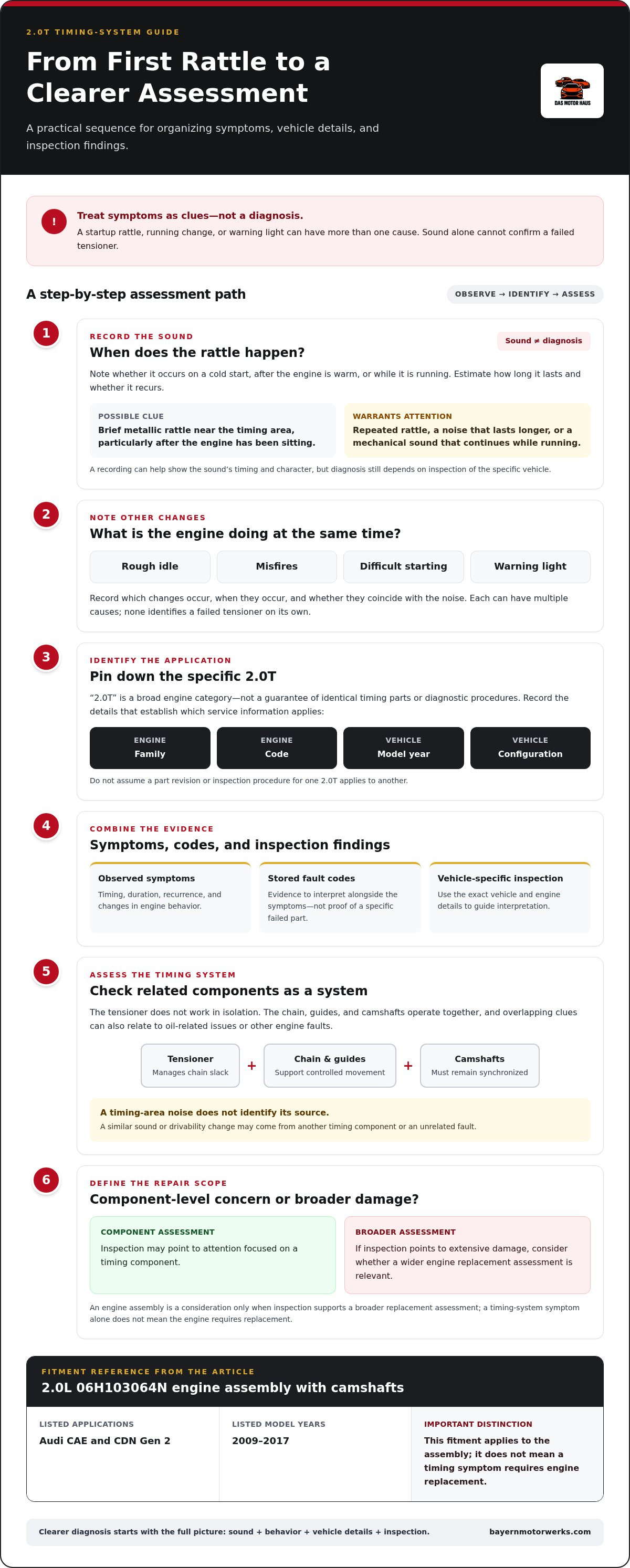
A clear record of what the engine is doing makes diagnosis more useful. Follow a deliberate sequence: document the symptoms, identify the vehicle and engine, obtain a vehicle-specific assessment, then decide the repair scope based on the evidence. Persistent or worsening mechanical noise warrants prompt professional assessment, but it doesn’t predict which part has failed.
What information should owners document before diagnosis?
Note whether a noise occurs during a cold start, after the engine is warm, or while driving. Record whether it happens repeatedly, whether its character changes, and whether the engine also starts or runs differently. Write down dashboard warnings and available diagnostic findings, but treat them as clues rather than a final diagnosis.
Gather the vehicle’s year, model, and engine code. “2.0T” alone may not identify the exact configuration, and accurate details help ensure that diagnostic information applies to the engine in question. A short recording of a recurring sound can help convey its timing and character, though it doesn’t replace inspection.
When might inspection expand beyond the tensioner?
A technician may assess the tensioner alongside the chain, guides, camshafts, and related engine condition. That broader inspection helps establish whether the evidence supports a component-level repair or a wider repair plan. It doesn’t automatically mean the engine should be replaced. The appropriate scope depends on inspection and vehicle-specific diagnostic information.
Inspection and vehicle-specific evidence, not a symptom checklist, confirm the cause. That distinction matters before selecting parts or considering a broader assembly. Bayern Automotive’s 2.0L 06H103064N engine assembly with camshafts is listed for Audi CAE and CDN Gen 2 applications from 2009-2017. It’s relevant only when the assessment supports broader replacement considerations, not as a standalone tensioner repair. For background on that assembly, read the 06H103064N cylinder-head and engine-assembly guide.
If diagnosis points to extensive damage or a broader engine-condition concern, explore the 2.0L engine assembly as part of evaluating the appropriate replacement scope.
When Timing-System Damage Makes a Broader 2.0T Engine Assessment Relevant
A confirmed timing-chain tensioner issue doesn’t automatically call for an engine assembly. If inspection shows the concern is limited to a replaceable timing component and the engine’s broader condition supports that repair scope, the assessment may remain focused. A wider engine evaluation becomes relevant when evidence points to related damage or other conditions that affect the appropriate repair scope.
Repairing a component versus assessing the complete engine
A component-level repair and a broader assembly assessment answer different questions. The first addresses a diagnosed fault within the timing system. The second considers whether related damage or the engine’s overall condition changes the appropriate repair scope. Neither option is inherently superior. Vehicle-specific inspection findings should guide the decision, not symptoms alone or an assumption that every tensioner concern requires engine replacement.
For example, an inspection that identifies a tensioner concern without broader damage may support a different plan from findings involving multiple timing components or more extensive engine damage. The goal is to establish the condition of the affected parts and the engine before selecting a repair path. The symptoms of bad timing chain tensioner 2.0T drivers notice can prompt that assessment, but they don’t establish how much work is needed.
Where the 06H103064N assembly fits the discussion
When findings make a broader replacement assessment relevant, accurate application details are essential. Bayern Automotive supplies a 2.0L 06H103064N engine assembly with camshafts for Audi CAE and CDN Gen 2 applications from 2009-2017. This is a broader engine option, not a standalone timing-chain tensioner or tensioner kit. Consider its stated application alongside verified vehicle and engine fitment.
Keep the sequence clear: diagnose the timing concern, assess related damage and overall engine condition, then determine whether a component repair or broader assembly evaluation fits the findings. A broader assessment is a decision informed by evidence, not an automatic consequence of hearing a rattle.
For details on the assembly and its fitment context, review the 06H103064N cylinder-head and engine-assembly guide.
Use the Evidence to Choose the Right Next Step
The symptoms of bad timing chain tensioner 2.0T drivers notice can overlap with chain, guide, camshaft, oil-related, or unrelated engine faults. A startup rattle or warning light is a reason to investigate, not proof of a specific failure. Record when symptoms occur, identify the exact vehicle and engine, and use inspection findings to establish whether the repair should remain component-level or include a broader engine assessment.
If extensive damage makes engine replacement relevant, fitment and overall condition should guide the decision. Bayern Automotive’s listed 2.0L 06H103064N assembly includes camshafts and is specified for Audi CAE and CDN Gen 2 applications from 2009-2017. It’s an engine assembly, not a standalone tensioner repair.
For more context on the assembly and its application, review the 06H103064N cylinder-head and engine-assembly guide.
Frequently Asked Questions
What are the most common symptoms of a bad timing chain tensioner on a 2.0T?
The symptoms of bad timing chain tensioner 2.0T owners may notice include startup rattle, unusual noise near the timing area, rough running, or relevant diagnostic findings. None confirms tensioner failure by itself. Chain or guide wear, camshaft-related issues, oil-related concerns, and other engine faults can produce overlapping clues. Use the symptom pattern to guide inspection, and make sure diagnosis accounts for the exact vehicle and engine code.
Can a bad 2.0T timing chain tensioner cause a rattling noise on startup?
Yes, a tensioner problem is one possible cause of a startup rattle near the timing area, especially if the sound recurs. Noise alone can’t identify which component is responsible. Note whether it occurs during a cold start or warm restart, whether it changes as the engine runs, and whether other symptoms accompany it. A technician can compare those observations with vehicle-specific diagnostic information and inspection of related timing components.
Can a timing chain tensioner problem cause a check-engine light or misfire?
A timing-related fault may occur alongside an engine-running problem or diagnostic warning, but a check-engine light or misfire can have several causes. Interpret stored fault information for the exact vehicle and engine, then consider it alongside the symptoms and inspection findings. Don’t replace a tensioner based only on a warning or misfire. Diagnosis should establish which fault the evidence supports before repair scope is chosen.
How can I tell whether the problem is the tensioner or the timing chain?
You generally can’t distinguish a tensioner fault from chain or guide wear by sound alone. A sound’s timing and recurrence can help frame the investigation, but diagnosis also requires consideration of engine behavior, vehicle-specific data, and inspection of related timing components. Look for the evidence supporting the suspected cause rather than treating one noise, warning, or code as proof that a particular part has failed.
Is it safe to keep driving with a suspected bad timing chain tensioner?
A symptom checklist can’t determine whether continued driving is safe for a specific engine. Persistent or worsening mechanical noise, new running problems, or additional warning signs call for prompt assessment. Don’t assume a brief sound is harmless, but don’t conclude that severe damage has occurred based on sound alone. Have the vehicle evaluated using its exact engine details and relevant diagnostic information before deciding what to do next.
What other problems can sound like a bad timing chain tensioner?
Chain or guide wear, camshaft-related issues, oil-related concerns, and other engine noises can resemble a tensioner problem. Rough running or misfires may also stem from ignition faults or systems outside the timing assembly. The sound’s location, timing, and recurrence help organize the investigation, but they can’t establish the failed part. Vehicle-specific diagnostic information and inspection are needed to distinguish between these possibilities.
Does every 2.0T timing chain tensioner problem require a complete engine replacement?
No. A confirmed tensioner concern doesn’t automatically mean the complete engine needs replacement. Repair scope depends on diagnosis, the condition of related components, any established damage, and the engine’s broader condition. One case may support focused component repair, while another may warrant a wider assessment. Don’t decide between repair and replacement from symptoms alone; use inspection findings and verified fitment to guide the decision.