

Porsche Performance Upgrades: A Buyer’s Guide to a Balanced Build
More power doesn’t automatically make a Porsche a better driver’s car. Porsche performance upgrades work best as a coordinated system, with each component suited to the vehicle’s configuration, existing setup, and intended use. A mismatch between power, braking, and chassis choices can undermine the balance you want to improve.
Choosing between options can be difficult. Model and generation differences affect fitment, while broad product categories don’t always make clear what to prioritize. This guide compares the main upgrade categories and explains how performance, braking, and chassis components relate, so you can make choices around how you drive rather than simply collect parts.
It also covers practical purchase considerations, including fitment and supporting components. Bayern Automotive supplies genuine OEM and premium aftermarket parts for Porsche, including performance upgrades and drivetrain, brake, chassis, and transmission components. Comparing these related categories can help you plan a focused improvement or a broader build around the vehicle as a whole.
Key Takeaways
- Define whether your Porsche is built for daily road use, spirited driving, or track-focused driving before choosing parts.
- Compare powertrain, braking, chassis, wheel, and exterior upgrades as connected systems, not isolated changes.
- Choose Porsche performance upgrades that suit your goals while accounting for supporting modifications and build complexity.
- Record your model, generation, configuration, and current modifications to guide fitment decisions before buying.
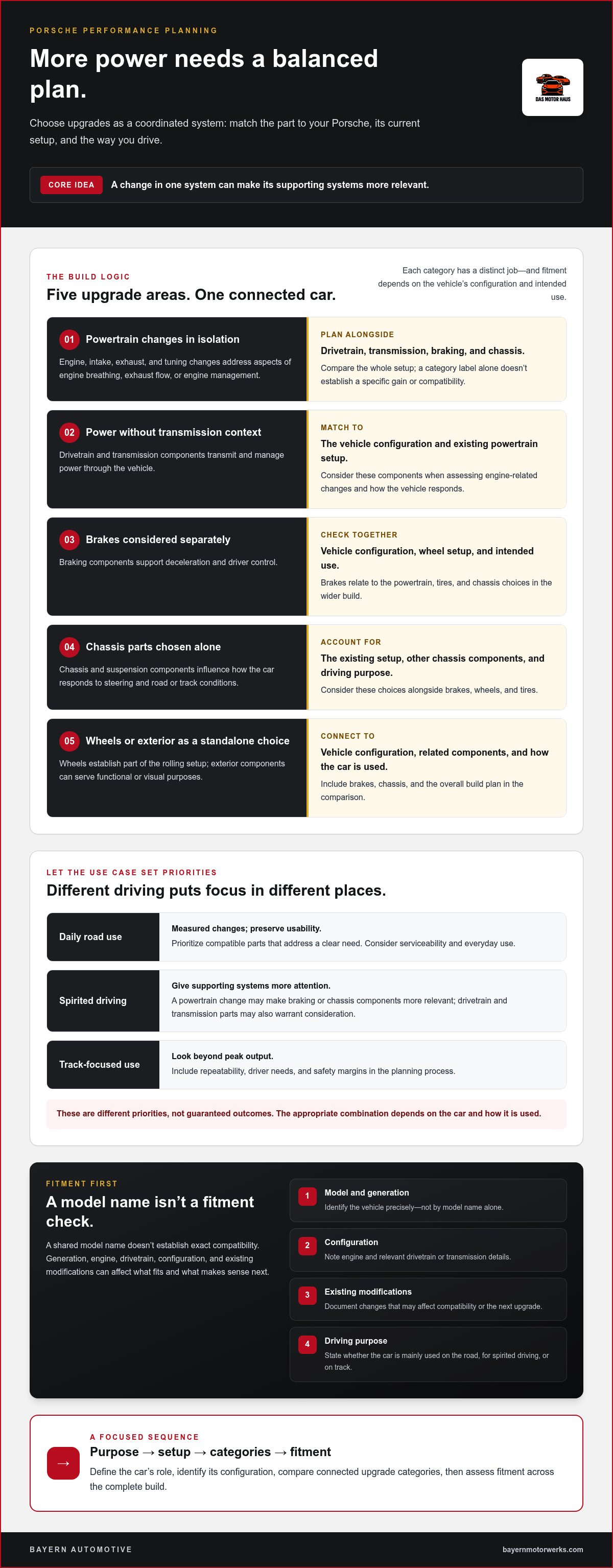
- Use a clear sequence: define the car’s role, identify its setup, compare upgrade categories, then assess fitment across the complete build.
Porsche Performance Upgrades: Begin With Your Model and Driving Purpose
The right parts depend on the car they’ll serve and how you intend to drive it. A daily road car, a Porsche used for frequent spirited driving, and a track-focused build place different demands on components. Start with the vehicle’s exact configuration and your priorities, then consider upgrades as a system rather than selecting parts for their headline appeal. Porsche’s identity has long been tied to performance-focused vehicles, as outlined in this History and Performance Focus of Porsche, but your use case still determines the sensible direction for a build.
A coordinated performance build is a set of compatible components selected for the car’s configuration and intended use, with attention to the systems that support it. More power, for example, should be considered alongside relevant braking, chassis, drivetrain, and transmission components. The goal isn’t maximum modification by default. It’s a deliberate combination of parts that serves the way you use the car.
How does intended use change a Porsche upgrade plan?
For daily road use, measured changes can help preserve the car’s familiar character and usability. Prioritize compatible components that address a clear need rather than adding modifications simply because they’re available. Consider how each choice may affect the rest of the setup, including serviceability and everyday use.
Frequent spirited driving can shift attention toward supporting systems. A powertrain change may make braking or chassis components more relevant, while drivetrain and transmission parts may also warrant consideration. For track use, think beyond peak output. Repeatability, driver needs, and safety margins belong in the planning process. These are different priorities, not guaranteed outcomes; the appropriate combination depends on the car and how it’s used.
Why do Porsche model and generation matter?
A shared model name doesn’t establish exact component compatibility. Model, generation, engine, drivetrain, and other configuration details can affect fitment, and existing modifications may change what makes sense next. A part that suits one version of a Porsche may not suit another. Treat fitment as a vehicle-specific question, not an assumption based on a badge or broad model family.
Before comparing Porsche performance upgrades, record the details that define your car and its current state:
- Model and generation: Identify the vehicle precisely rather than relying on the model name alone.
- Configuration: Note the engine and relevant drivetrain or transmission details.
- Existing modifications: Document changes that may affect compatibility or the next upgrade.
- Driving purpose: State whether the car is primarily used on the road, for spirited driving, or on track.
This record gives fitment research a sound starting point and keeps parts selection tied to the build’s actual needs. When considering an engine-related change, include the supporting systems in your comparison before narrowing down individual components.
Porsche Performance Upgrade Categories and How They Work Together
Upgrade categories describe different jobs, not interchangeable routes to the same result. Powertrain changes affect how the engine produces and manages output; drivetrain parts transmit it. Braking and chassis components influence how the car responds to driver input, while wheels and exterior components affect the vehicle’s configuration or use. A sound plan considers these roles together, then narrows the options by fitment and intended use.
| Category | Primary function | Fitment considerations | Complementary systems |
|---|---|---|---|
| Engine, intake, exhaust, and tuning | Alter aspects of engine breathing, exhaust flow, or engine management. | Engine and vehicle configuration, existing modifications, and the intended use. | Drivetrain, transmission, braking, and chassis. |
| Drivetrain and transmission | Transmit and manage power through the vehicle. | Vehicle configuration and the existing powertrain setup. | Engine-related changes and the systems that control vehicle response. |
| Brakes | Support deceleration and driver control. | Vehicle configuration, wheel setup, and intended use. | Powertrain, tires, and chassis choices. |
| Chassis and suspension | Influence how the vehicle responds to steering and road or track conditions. | Existing setup, other chassis components, and driving purpose. | Brakes, wheels, and tires. |
| Wheels and exterior | Wheels establish part of the vehicle’s rolling setup; exterior components can serve functional or visual purposes. | Vehicle configuration, related components, and how the car is used. | Brakes, chassis, and the overall build plan. |
What roles do powertrain and drivetrain upgrades serve?
Engine, intake, and exhaust changes address different parts of the engine’s operating system, while tuning-related changes adjust engine management. Their effects depend on the specific component and vehicle; category descriptions alone don’t establish a particular gain or compatibility. Drivetrain and transmission components have a different role: they help carry and manage power as it moves through the vehicle. That distinction matters when assessing a change. An engine-focused choice may affect supporting systems, but it doesn’t replace their separate functions.
How do brake, chassis, and exterior upgrades complement performance?
Braking components support controlled deceleration, and chassis components influence how the car responds through turns and changes in direction. Their relevance can shift with the rest of the setup and the demands of intended use. Consider wheels alongside brake and chassis fitment, rather than as an isolated styling decision. Aerodynamic exterior parts are another distinct category; their function and suitability depend on the component and vehicle setup, not appearance alone.
Supporting systems belong in upgrade planning because performance depends on how the complete vehicle works together, not on one component in isolation. This matters particularly for track-focused Porsche performance upgrades, where repeatable behavior and appropriate safety margins deserve consideration alongside powertrain changes. Bayern Automotive’s Porsche performance and supporting parts let you compare component categories as part of the broader build.
Compare Porsche Upgrade Paths Without Losing the Car’s Balance
There isn’t one correct sequence for every Porsche. A focused road build, a broader multi-system plan, and a track-oriented setup can all make sense when parts are selected around the car’s condition and intended use. The difference lies in scope: a narrower plan addresses a defined priority, while a wider plan considers how several systems interact. More modifications bring more decisions and fitment dependencies, not an automatic advantage.
- Restrained road-oriented path: Choose a specific improvement and keep the rest of the vehicle’s role in view. This limits unnecessary changes and can preserve a familiar road-use setup.
- Broader multi-system path: Plan related powertrain, drivetrain, braking, and chassis choices together. This gives more attention to supporting needs, but adds complexity and makes compatibility across components more important.
- Track-oriented path: Consider repeatability, driver requirements, and safety margins across the vehicle. Track demands can make supporting systems central to the plan, rather than an afterthought to powertrain changes.
These paths are comparison points, not fixed packages. A road car may have a clear need that calls for one focused change; a track-driven car may need a broader review of existing components before you select anything new. In either case, the vehicle’s condition and current modifications influence what makes sense next. A part that complements one setup may add little to another.
When is a focused upgrade path the better choice?
A focused path fits when you can state the driving goal clearly. If the priority is a particular aspect of the car’s response, begin by assessing the relevant system and the parts already fitted. This helps prevent unrelated modifications from accumulating and keeps the build easy to evaluate. For predominantly road use, restraint can preserve a coherent setup without implying that every owner needs maximum output or extensive changes.
Before choosing a component, note the car’s condition and identify existing modifications that could affect its role. A seemingly simple addition may interact with parts installed earlier. Ask not only what a proposed upgrade changes, but whether that change serves your goal and fits the vehicle as it stands.
When should a build account for multiple vehicle systems?
Broader planning becomes relevant when a change may alter the demands on other parts of the vehicle. A powertrain-first approach begins with the engine or transmission objective, then considers related drivetrain, braking, and chassis needs. A balanced approach evaluates those systems together from the outset. Neither sequence is universally right; the vehicle’s condition, configuration, and intended use determine which review is more useful.
For a track-focused car, account for how the planned setup will be used repeatedly, and avoid treating a single component as the whole solution. The right safety margin depends on the complete vehicle and its demands, not on a generic parts list. Compare Porsche performance upgrades by purpose, supporting requirements, and fitment, rather than by modification count. Bayern Automotive’s Porsche performance, drivetrain, brake, chassis, and transmission categories can help you frame that system-level comparison as you refine a build.
Use This Porsche Performance Parts Fitment Checklist Before Buying
Fitment starts with accurate vehicle information, not appearance or a broad model label. Before buying Porsche performance upgrades, match the product’s stated application to your specific car and account for modifications already installed. Comparing those details helps narrow the options and avoids assuming a part fits simply because it looks like one shown on another vehicle.
What vehicle information should buyers gather?
Use this checklist before comparing product descriptions:
- Identify the model. Record the full model designation rather than relying on a general family name.
- Note the generation. Distinguish the vehicle’s generation so the fitment reference is specific.
- Capture the configuration. Record relevant engine, drivetrain, and transmission details for the car.
- List current modifications. Include changes that may affect the component being considered or its supporting systems.
- Define the intended use. Note whether the car is primarily road-driven, used for spirited driving, or built for track use.
- Compare the product application. Review the fitment details for the specific part against the vehicle information you recorded.
Two cars can look alike while differing in generation, configuration, or installed components. Visual similarity doesn’t establish compatibility. Let product descriptions and application details guide the decision; don’t extend a fitment claim from one vehicle to another without product-specific support. If the car has been modified, include those changes in your assessment rather than treating its original configuration as the complete picture.
How should buyers assess part quality and provenance?
Genuine OEM components and premium aftermarket parts are distinct sourcing categories. OEM parts are genuine components from the vehicle’s original equipment supply, while premium aftermarket parts are produced outside that original supply. Neither label alone determines whether a component suits a particular build. Consider the part’s stated application, provenance, and relationship to your upgrade objective, then assess how it fits the vehicle’s existing setup.
Bayern Automotive supplies genuine OEM and premium aftermarket Porsche components sourced directly from Europe and worldwide. Use the product’s application details to connect that selection to your car and its intended use. For a track-focused build, fitment is only one consideration; the part’s role in the wider setup matters too. Don’t select on category or appearance alone. Base the comparison on your vehicle details and the product application.
Use your checklist as you browse Porsche parts at Bayern Automotive, comparing performance and supporting components against your car’s configuration and build priorities.
Find Porsche Performance Upgrades That Fit the Complete Build
A considered purchase follows a clear sequence: define the car’s role, identify its exact configuration, compare the systems involved, then assess fitment for each component. That order keeps the decision tied to the build rather than to a part’s category or appearance. For track use, it also creates space to consider how a proposed change relates to supporting components and the vehicle’s intended safety margins.
Bayern Automotive supplies Porsche performance parts alongside genuine OEM and premium aftermarket components for drivetrain, braking, chassis, transmission, and body systems. These related categories give you a broader basis for evaluating a build, whether the next decision concerns one component or several connected systems.
What can a specialist parts catalog contribute to the buying process?
A specialist catalog can help put a parts decision in context. An engine-related upgrade belongs to a different system than a brake or chassis component, yet a choice in one area may influence what deserves consideration elsewhere. Comparing related categories encourages you to look beyond a single upgrade and consider how each part fits the vehicle’s purpose.
Provenance and curation are useful evaluation factors, not promises of a particular performance result. Genuine OEM and premium aftermarket parts are distinct sourcing options, and the relevant choice depends on the product, vehicle, and build objective. Bayern Automotive sources components directly from Europe and worldwide, with Porsche-related categories to consider as you plan.
What should the reader do next?
Bring your vehicle details and driving goals to the browsing process. A track-focused plan may call for closer attention to the relationship between powertrain changes and supporting systems, while a narrower objective can keep the parts search focused. In either case, evaluate fitment for the specific vehicle and component; a broad model label alone isn’t enough to establish compatibility.
Compare each option’s product information against your car’s configuration and the role the part will serve. If a potential part affects another system, include that relationship in your decision before treating the selection as complete. This keeps the focus on appropriate parts and a coherent build, rather than adding components without a defined purpose.
Explore Bayern Automotive’s Porsche parts and upgrades with your vehicle details in mind. Compare performance, drivetrain, brake, chassis, transmission, and body components against the build you’re planning.
Turn Your Build Priorities Into a Confident Next Step
A well-planned Porsche build can develop over time. Before choosing the next part, decide which change matters most to your driving experience and which supporting considerations should shape the decision. Keep a shortlist of priorities, and treat each addition as part of the car’s ongoing development rather than an isolated purchase. That discipline helps keep Porsche performance upgrades aligned with the character you want from your car.
Bayern Automotive brings over 40 years of automotive industry expertise to its selection of Porsche parts. As you compare components, keep the exact vehicle and intended use in view. A considered choice is a stronger starting point than a rushed one.
Explore Porsche parts and performance upgrades and take the next step toward a build shaped around your goals. A clear plan gives every decision direction and helps your Porsche evolve with care and purpose.
Frequently Asked Questions
Which Porsche performance upgrades should I choose first?
Choose an upgrade that addresses a clear limitation or priority in how you use the car. Before adding parts, establish the vehicle’s current condition and note any maintenance or setup issues that could affect your decision. For example, if your goal is more responsive handling, clarify what you want to change before shopping across unrelated categories. A defined objective helps keep your first purchase relevant and gives you a useful basis for assessing later changes.
Are Porsche performance upgrades compatible across different model generations?
Not by default. Shared model names or similar appearance don’t establish that a component fits across generations. Product application can depend on the specific vehicle configuration, so treat each fitment reference as specific to the listed part and vehicle. If comparing parts for cars from different generations, evaluate each application separately rather than assuming a component that suits one will work on another.
Can I combine OEM and aftermarket Porsche performance parts?
Yes. A build can include both, provided each component suits the vehicle and works with the parts around it. You might use a genuine OEM component for one system alongside a premium aftermarket part for another, then evaluate how each fits the intended application and rest of the setup. The labels alone don’t establish whether a combination is suitable; product-specific fitment and the complete build should guide the choice.
Do Porsche performance upgrades affect everyday drivability?
They can, depending on the part and how it interacts with the rest of the car. A change intended for more focused driving may affect aspects of everyday use, such as comfort, noise, or how the vehicle responds. These effects vary by component and setup, so consider the routines the car needs to support before purchasing. A road-driven Porsche benefits from choices assessed for both the desired change and regular use.
How do I check whether a performance part fits my Porsche?
Compare the product’s application details with your car’s exact model, generation, and configuration. Also account for modifications that may change the surrounding setup, such as previous drivetrain or chassis changes. Don’t rely on a photograph, broad model name, or another owner’s installation as proof of fitment. The product information should align with the specific vehicle; treat a mismatch in the details as a reason to pause your selection.
Should I upgrade Porsche brakes and chassis along with powertrain components?
Consider them as part of the same plan, especially if a powertrain change alters what you expect from the car. Brakes and chassis serve different functions, but both contribute to how the vehicle responds to driver inputs. That doesn’t mean every build needs simultaneous changes. Review the car’s condition, current components, and intended use to determine whether supporting-system upgrades belong in the same phase or a later step.
Are track-focused Porsche upgrades suitable for street-driven cars?
Some components may suit both uses, while others may involve trade-offs that don’t align with everyday driving. Suitability depends on the specific part, its intended application, and the configuration of the car. Before choosing a track-oriented component for a road-driven Porsche, consider how it fits your regular use and the rest of the setup. A track-focused label isn’t a guarantee of suitability for every street build.
1 comment
Excellent article. Well researched and spot on with regard to what to add and what to expect.