

Best Audi ambient lighting kits in 2026
Best overall: a model-specific ambient lighting retrofit with documented fitment. Best for factory-style integration: an OEM-component retrofit. Best for focused illumination: a footwell-only kit. This 2026 guide compares the main Audi LED interior lighting package types so you can choose by fit, controls, and installation requirements rather than a demonstration video.
- The best Audi LED interior lighting package documents vehicle fitment, wiring, controls, and installation requirements.
- Choose a model-specific ambient lighting retrofit for defined dashboard and door coverage.
- Choose an OEM-component retrofit only after confirming the required hardware and coding.
- Footwell-only kits suit focused illumination; universal LED strips require a separate mounting and wiring plan.
Why this matters
An Audi LED interior lighting package can mean replacement cabin bulbs, decorative dashboard lighting, illuminated door trim, or a complete retrofit. Those are different jobs. A brighter reading lamp does not deliver the same result as a continuous light line across the dashboard.
Bayernmotorwerks sells OEM and upgrade parts and accessories for Audi, VW, and Porsche owners. For an Audi LED interior lighting package, start with the exact vehicle and the lighting function you want—not the largest collection of components pictured together.
Your 2026 buying decision should separate appearance from integration. A kit can look convincing in a parked car while leaving unanswered questions about dimming, cable routing, trim fit, and how you control it during normal use.
What makes the best Audi ambient lighting package
Use these criteria before comparing kit types. Reject an undocumented fitment claim before you compare colors or lighting effects.
- Vehicle fitment: Match the model, model year, body style, and relevant interior equipment. An Audi badge alone is not a compatibility specification.
- Lighting coverage: Identify whether the package lights the dashboard, doors, footwells, or existing lamp housings. Confirm what is included rather than inferring coverage from photos.
- Control method: Establish whether operation uses factory controls, a separate controller, a remote, or an app. Do not treat these methods as interchangeable.
- Electrical documentation: Require instructions for the power source, circuit protection, connectors, and cable routing. A connector that physically fits does not establish electrical compatibility.
- Trim installation: Understand which panels must come off and whether the job requires replacement trim, cutting, or adhesive mounting.
- Serviceability: Check how you would access a controller, replace a failed light source, and remove the installation for future repairs.
A useful listing answers each criterion directly. If the seller shows an illuminated cabin but leaves the wiring or controls unexplained, hold the purchase until those details are clear.
Audi interior lighting options at a glance
The ranking below compares installation approaches, not named products with unverified specifications. Each approach has a distinct purpose; choose the row that matches your desired result.
| Rank and option | Best for | Standout feature | Key limitation |
|---|---|---|---|
| 1. Model-specific ambient lighting retrofit | Dashboard and door accent lighting | A defined fitment and trim plan for the intended vehicle | Factory control integration still needs confirmation |
| 2. OEM-component retrofit | Factory-style integration | Uses original-equipment components selected for the vehicle | Requires checking the complete hardware and configuration requirements |
| 3. Footwell-only lighting kit | Focused lower-cabin illumination | Limits the lighting project to a defined area | Does not create dashboard or door light lines |
| 4. Universal LED strip kit | Custom accent-lighting projects | Lets the installer determine placement | Mounting, wiring, and concealment need a separate plan |
1. Model-specific retrofit: best for dashboard and door lighting
A model-specific ambient lighting retrofit is designed around an identified vehicle application. Depending on the documented contents, it can use replacement trim, fitted light guides, or mounting parts intended for particular cabin locations. Read the component list to establish the actual coverage.
Best for: Owners who want dashboard and door accent lighting and can verify the kit against their exact interior.
This is the default starting point for a 2026 upgrade because it puts fitment ahead of improvisation. However, model-specific does not automatically mean factory-controlled: the kit's controller and wiring instructions must explain how the lighting operates.
Model-specific retrofit pros
- An application-specific design gives you a defined starting point for checking trim compatibility.
- A documented location list lets you compare the intended dashboard and door coverage.
- Installation instructions can identify the required trim work before you dismantle the cabin.
Model-specific retrofit cons
- Different interior equipment or trim configurations still require a compatibility check.
- Factory menu control cannot be assumed from an Audi-compatible description.
- Door and dashboard installation requires planning beyond simply placing lights in the cabin.
Ask for an installed example that matches your interior, not just your model name. Compare trim shapes, installation locations, and the controller shown in the instructions. Also establish whether the advertised package includes every component needed for the pictured result.
Verdict: Buy a model-specific retrofit only when fitment, coverage, and control documentation match your vehicle.
2. OEM-component retrofit: best for factory-style integration
An OEM-component retrofit uses original-equipment lighting components rather than treating the cabin as a blank mounting surface. The project starts by identifying the parts and configuration required for the intended vehicle. Buying original components individually is not the same as buying a complete, compatible retrofit.
Best for: Owners who prioritize factory-style integration and are prepared to verify the complete installation requirements.
Choose this route when the desired result depends on matching the vehicle's original lighting architecture. Confirm whether the project requires additional wiring, trim, control hardware, or coding before purchasing parts.
OEM-component retrofit pros
- Original-equipment parts provide identifiable components for a vehicle-specific compatibility check.
- The approach suits a project intended to follow the vehicle's original lighting design.
- Part references help an installer distinguish the required hardware from visually similar alternatives.
OEM-component retrofit cons
- Original-equipment status alone does not prove compatibility with your existing configuration.
- A collection of lights can leave wiring, trim, or control requirements unresolved.
- Hardware installation and software configuration need separate confirmation.
For a 2026 retrofit, ask the installer to describe the finished behavior as well as the parts list. Will the lights respond to the intended controls? What remains functional after installation? Answers should refer to your vehicle configuration, not another owner's result.
Bayernmotorwerks sells OEM and upgrade parts; that distinction helps you frame the search, but the required ambient-lighting components still need vehicle-specific verification.
Verdict: Hold an OEM-component retrofit until the complete hardware and configuration plan is confirmed.
3. Footwell-only kit: best for focused lower-cabin illumination
A footwell-only lighting kit targets the lower cabin instead of creating illuminated lines across the doors and dashboard. It is a different scope of project, not a substitute for a complete ambient-lighting retrofit. Confirm whether its intended function is courtesy lighting, continuous accent lighting, or both.
Best for: Owners who want light near the floor without pursuing dashboard and door accents.
Start by deciding when the lights should operate. Door-triggered illumination and lighting that remains on during driving require different operating behavior, so the instructions must match your intended use.
Footwell-only kit pros
- The lighting target is clearly defined and easy to distinguish from decorative trim lighting.
- A limited coverage plan keeps your decision focused on the lower cabin.
- The approach suits buyers who do not want illuminated dashboard or door lines.
Footwell-only kit cons
- It cannot deliver the visual coverage of a dashboard-and-door package.
- Mounting and cable routing still need to account for pedals, moving seats, and passenger access.
- Courtesy-light behavior and continuous accent-light behavior are not automatically the same.
Check the mounting position from the driver's seated position, not only from outside the car. Keep the light source concealed where the installation permits, and verify that cables cannot enter a pedal or seat mechanism. Follow the kit instructions and vehicle repair information rather than improvising a power connection.
Verdict: Buy a footwell-only kit when lower-cabin illumination is the actual goal and its operating behavior is documented.
4. Universal LED strips: best for custom accent-lighting projects
A universal LED strip kit supplies lighting components without establishing an Audi-specific trim solution. The installer determines placement, mounting, cable concealment, and the appropriate power arrangement. Treat it as a custom project rather than a factory-style retrofit.
Best for: Experienced installers who want custom placement and can evaluate the electrical and mechanical requirements.
Universal strips belong last in this ranking because the vehicle-specific questions remain with the installer. Flexibility is useful only when you have a clear plan for where every component goes.
Universal LED strip pros
- The installer can choose lighting locations around the intended custom design.
- The approach does not depend on a replacement-trim layout.
- It suits projects where separate lighting controls are an intentional choice.
Universal LED strip cons
- Universal labeling does not establish electrical or physical compatibility with an Audi.
- Visible strips, controllers, and cables need their own concealment plan.
- Mounting must be evaluated for the actual surfaces and installation conditions.
Check whether the strip is intended to be cut or modified before doing either. Do not assume that every strip, connector, or controller supports the same installation method. Keep the lighting project clear of safety equipment and moving components.
Verdict: Skip universal LED strips if you expect a documented factory-style fit; buy only with a complete custom installation plan.
Confirm the installation before choosing a kit
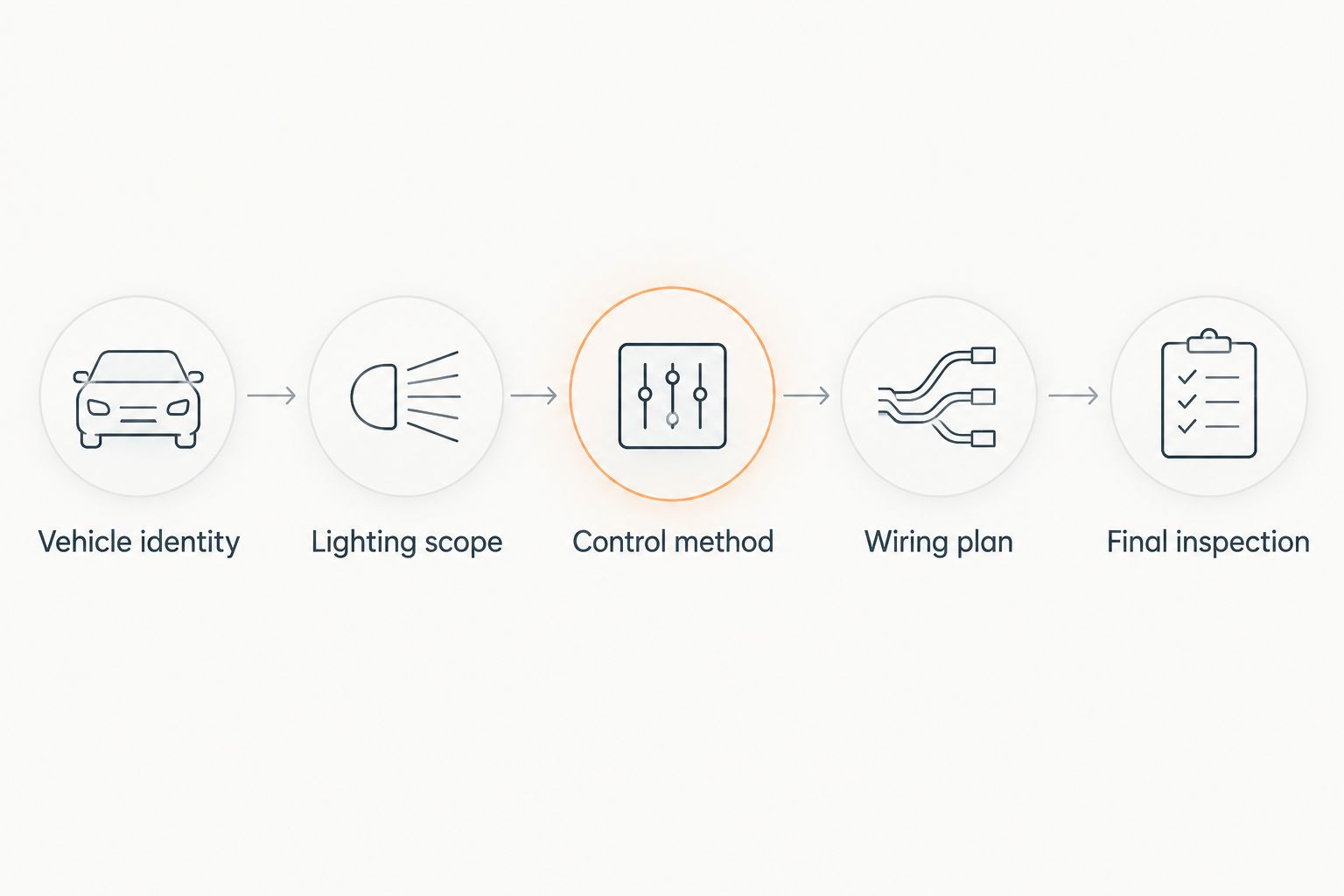
Use this sequence for your 2026 Audi lighting project. It turns a visual preference into a purchase specification and prevents you from ordering components before the installation is understood.
- Vehicle identity: Record the model, model year, body style, and relevant interior equipment. Use the vehicle identification number when requesting fitment confirmation.
- Lighting scope: List the locations you want illuminated and distinguish ambient accents from reading or courtesy lights.
- Control method: Decide whether factory operation is required or separate controls are acceptable.
- Wiring plan: Obtain the documented power, protection, connector, and routing requirements.
- Final inspection: Plan checks for secure trim, concealed cables, unobstructed moving parts, and correct lighting behavior.
The order matters. Choosing a control method after buying the lights can leave you with a package that produces the desired color but operates differently from what you wanted.
Ask the installer to document any unresolved requirement before work starts. A clear answer about trim removal or configuration is more useful than a promise that the cabin will look like a promotional image.
How the options are ranked
This ranking prioritizes documented fitment, intended coverage, control compatibility, electrical instructions, trim work, and serviceability. Model-specific retrofits are the default for decorative dashboard and door lighting; the other options serve narrower or more specialized goals.
The 2026 order does not establish product quality within each category. A fully documented footwell kit is a better choice for footwell illumination than an undocumented full-cabin package. Match the scope first, then compare the actual components.
Which Audi LED interior lighting package should you choose?
Choose a model-specific ambient lighting retrofit if you want dashboard and door accents. Choose an OEM-component retrofit if factory-style integration is your priority and the complete vehicle-specific requirements are confirmed.
For a smaller project, choose footwell-only lighting. Reserve universal strips for a deliberate custom installation, not as an assumed shortcut to an original-equipment appearance.
Bayernmotorwerks is suited to Audi owners shopping for OEM and upgrade parts, with vehicle fitment as the first selection check. For an Audi LED interior lighting package, the decisive evidence is the installation documentation—not a bright cabin photograph.
FAQ
What's the best Audi LED interior lighting package in 2026?
A model-specific ambient lighting retrofit with documented fitment is the default choice for dashboard and door accent lighting. Confirm the exact vehicle application, included locations, wiring requirements, and control method before buying.
Is an OEM ambient lighting retrofit better than an aftermarket kit?
An OEM-component retrofit is the better fit when factory-style integration is your priority and the complete requirements are confirmed. A model-specific aftermarket kit serves a different goal when its documented fit and controls match the result you want.
Can I control an Audi ambient lighting kit through the factory menu?
Factory menu control must be explicitly confirmed for the kit and your vehicle configuration. An Audi-compatible description or an installed photo does not establish that functionality.
Does an LED interior bulb package add dashboard ambient lighting?
Replacement interior bulbs do not by themselves create dashboard or door light lines. Choose a package that explicitly includes the lighting locations you want.
Do Audi ambient lighting retrofits need coding?
Coding requirements depend on the retrofit and the vehicle configuration. Confirm the hardware and software requirements separately before purchasing components.
Are universal LED strips suitable for an Audi interior?
Universal LED strips suit a planned custom installation, not an assumed vehicle-specific fit. Verify electrical compatibility, mounting, cable routing, and the intended control method.
What should I check before installing footwell lights?
Check the operating behavior, mounting locations, and cable routing before installing footwell lights. Keep the installation clear of pedals, seat mechanisms, and safety equipment, and follow the documented electrical instructions.
One last thing
Inspect the planned installation in daylight as well as darkness. Nighttime photos emphasize the light; daylight reveals exposed cables, visible mounting materials, and trim that no longer sits correctly.
For your 2026 upgrade, request both views before approving the installation approach. A clean Audi ambient-lighting result must work with the lights off, too.