

Audi 2.0T Valve Job vs. Cylinder Head Replacement: How to Choose
Replacing the cylinder head isn’t automatically the safer choice. In the Audi 2.0T valve job vs cylinder head replacement decision, the key question is whether damage is limited to the valves or the head itself has defects a valve job can’t correct. A misfire or low compression may point to a valve problem, but symptoms alone don’t establish the repair scope. Compression and leak-down results, combined with direct inspection of the head, provide a clearer basis for deciding.
It’s reasonable to want evidence before approving extensive engine work, especially when the wrong repair can leave the underlying fault untouched. This guide explains what a valve job covers and where it stops, which inspection findings support repair or replacement, and how timing-related damage, cracks, or warpage can affect the decision. You’ll also learn what diagnostic evidence to request and why the exact engine code and generation matter when checking component fitment. The guiding principle is simple: repair the confirmed fault, and replace the head only when its condition warrants it.
Key Takeaways
- A valve job addresses valve sealing and related valvetrain components. It can’t correct every cylinder-head defect.
- For the Audi 2.0T valve job vs cylinder head replacement decision, use test results and measured head condition, not symptoms alone.
- Check whether the estimate identifies the failed component, documents inspection findings, and defines the proposed repair scope.
- Before considering replacement parts, verify the engine code, generation, and vehicle configuration against confirmed fitment information.
Audi 2.0T Valve Job vs. Cylinder Head Replacement: What Each Repair Actually Addresses
A valve job and a cylinder-head replacement address different levels of damage. A valve job services the head already in the engine, focusing on valve-to-seat sealing and related valvetrain components as the inspection and repair scope require. Replacement removes a head that isn’t suitable for service and installs a compatible head or assembly. Neither option is automatically better. The right choice depends on the documented condition and whether the existing head can meet applicable service specifications.
What does an Audi 2.0T valve job include?
The cylinder head forms the roof of the combustion chamber and houses the valves and other critical components. The cylinder head overview provides useful background. A valve job may include inspecting and servicing valves and their seats to restore sealing. Guides, seals, and other parts should be included only when supported by inspection, measurements, and the agreed repair scope. A valve job doesn’t, by itself, diagnose unrelated causes of engine symptoms.
What does cylinder-head replacement involve?
Replacement is considered when inspection shows the original head is unsuitable for service or can’t be brought within verified specifications. The replacement may be a head or a broader assembly, so confirm exactly what’s included and which components must be transferred. Verify the vehicle’s engine code and configuration before selecting parts. Replacing the head also won’t correct faults elsewhere in the engine unless those are diagnosed and addressed separately.
Use this comparison to clarify what each estimate covers:
| Factor | Valve job | Head replacement |
|---|---|---|
| Purpose | Service valve-seat sealing surfaces and related components as needed. | Replace a head that isn’t suitable for continued service. |
| Required inspection | Assess valves, seats, guides, and other relevant parts. Measure condition against applicable specifications. | Document why the original head can’t be repaired or reused, then confirm replacement compatibility. |
| Retained components | The inspected head remains. Parts may be serviced or replaced according to the findings. | Included and transferred components depend on the replacement part and agreed scope. |
| Decision evidence | Measurements and inspection show the head can meet verified service limits. | Inspection identifies damage or a condition that makes the original head unsuitable. |
The machine shop’s capabilities and the actual damage affect the work plan. A repairable head may warrant evaluation for a valve job; an unsuitable head may support considering replacement. For the Audi 2.0T valve job vs cylinder head replacement decision, ask for the inspection findings, measurements, and proposed scope in writing. Choose based on evidence, not on the assumption that replacing more components is inherently better.
Which Inspection Results Show Whether an Audi 2.0T Head Is Repairable?
A rough idle, misfire, or low compression can justify further testing, but symptoms alone don’t prove the cylinder head needs replacement. Similar problems can result from faults elsewhere in the engine. Before choosing between a valve job and replacement, ask for test results and a direct assessment of the head. The evidence should show whether the head can be repaired to verified specifications.
What can compression and leak-down tests establish?
A compression test compares how well each cylinder builds pressure during cranking. A leak-down test introduces pressurized air into a cylinder and helps indicate whether pressure is escaping past valves, piston rings, or other sealing areas. Neither test identifies every cause or determines the head’s condition on its own. Compare results across cylinders and interpret them alongside further inspection. Use manufacturer service information for applicable limits instead of relying on generic pass or fail figures.
What should a machine shop inspect and report?
Ask for a written assessment of the removed head, including checks for cracks, flatness, valve seats, guides, and sealing surfaces. The report should include relevant measurements, the specifications used for comparison, and whether the head can be serviced within those limits. Findings within verified repair limits may support evaluating a repair; damage or distortion beyond them may make reuse unsuitable. Confirm the proposed scope and any limits on reusing components.
A useful estimate connects each recommendation to a finding. Request documentation that identifies:
- Compression and leak-down results, including comparisons between cylinders.
- Head measurements and the service specifications used to assess them.
- Visible damage or wear, and which components require repair or replacement.
- The shop’s conclusion on whether the head is repairable and what work that conclusion assumes.
For complex engine work, ask who will perform the testing and head assessment, and what relevant experience or credentials they hold. The certified automotive professionals resource from ASE can help you learn about technician certification. Clear documentation makes it easier to compare the proposed repair with the evidence, without treating a single symptom or test as a final verdict.
If inspection supports considering a broader replacement route, verify the engine code and configuration before sourcing components. You can review Audi engine assembly options and confirm current catalog fitment for the specific vehicle before making a parts decision.
Valve Job or Head Replacement: Compare Repair Scope, Risks, and Parts Fitment
Compare repair paths only after inspection shows whether the cylinder head can meet verified service specifications. A valve job may retain a serviceable head and address a defined valve-related fault. Replacement may be more appropriate when the head is unsuitable for repair or reuse. Neither path guarantees that other engine faults are resolved, so compare the defined work scopes rather than the repair labels alone.
When does a valve job remain a reasonable option?
A valve job is worth evaluating when inspection identifies a valve-related sealing problem and the head remains within applicable repair limits. Ask for measured findings showing that the relevant surfaces can be serviced to specification. The estimate should identify the machine-shop work included, which parts will be replaced, and which components will remain. Other diagnosed engine faults may require separate parts and labor.
When might replacement be the more appropriate route?
Replacement becomes a consideration when documented damage or distortion puts the original head outside verified repair limits. Compare the proposed replacement scope with the machine shop’s assessment. Clarify what the replacement includes, what must transfer from the original, and what additional engine work is required. The broader scope may affect parts planning and downtime, but neither should be assumed without a defined estimate.
Keep the main cost and scope categories distinct, even if an estimate combines them:
- Machine-shop work: Inspection, measurement, and any approved head or valve servicing.
- Replacement components: The head or assembly, plus any separately specified parts.
- Related engine work: Other diagnosed repairs, removal and installation tasks, and post-repair checks.
This separation makes it easier to see what each option covers and what remains outside its scope. It also helps identify uncertainty before work is authorized, such as additional damage found during disassembly or components that can’t be reused.
Verify fitment before considering a replacement component. Check the vehicle model year, engine code and generation, part number, included cams, and configuration against the current catalog and the vehicle itself. The listed 06H103064N DAS MOTOR HAUS assembly includes cams and is specified for Audi CAE/CDN Gen 2 applications from 2009 to 2017. It is an engine assembly, not a confirmed standalone cylinder head. Confirm current availability and exact vehicle compatibility before treating it as a candidate.
The Audi 2.0T valve job vs cylinder head replacement decision should follow the evidence. Evaluate a valve job when documented findings support a repairable head, and consider replacement when the original falls outside verified limits. Compare complete scopes, including machine-shop labor, components, related work, and expected downtime, before choosing.
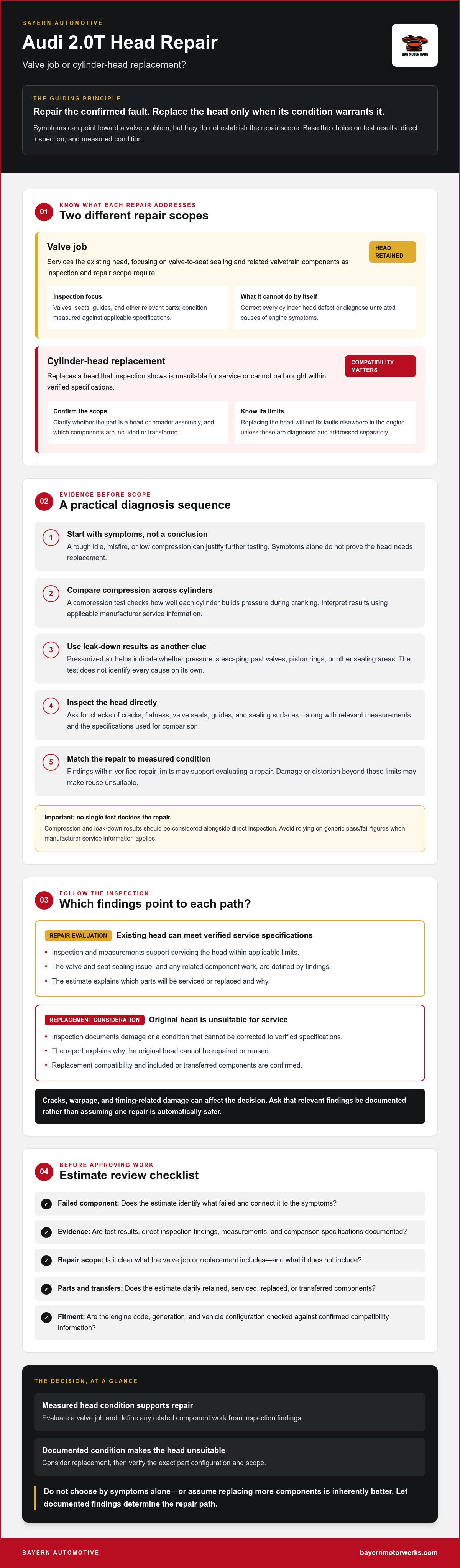
How to Evaluate a Repair Estimate Before Approving Audi 2.0T Head Work
A sound estimate connects the recommended repair to a documented fault. Before approving Audi 2.0T head work, check that the estimate identifies the failed component, cites supporting test or inspection evidence, and separates machining, replacement parts, reassembly, and other diagnosed work. This makes it easier to compare repair paths by scope instead of by headline total.
Questions to ask the diagnosing technician
Ask for the relevant test results and inspection findings, including measurements and the specifications used to assess them. Confirm what the estimate includes, excludes, reuses, or replaces. Also ask what additional findings could change the plan after disassembly or machine-shop inspection. Clear answers help distinguish confirmed work from contingencies that haven’t yet been verified.
Review the estimate in this order:
- 1. Diagnosis: Which component has failed, and what test or inspection evidence supports that conclusion?
- 2. Measurements: What was measured, and how do the results compare with applicable service specifications?
- 3. Proposed work: What machining, valve service, or replacement work is included? What falls outside the quoted scope?
- 4. Parts: Which parts are being supplied or reused? Who is responsible for sourcing them and confirming fitment?
- 5. Post-repair checks: What checks are planned to confirm the completed work addresses the diagnosed fault?
How to compare repair and replacement estimates
Compare like with like. One estimate may include machine-shop work and reassembly, while another lists replacement components or related engine work separately. Check which labor and parts appear in each scope, and clarify responsibility for additional components if inspection uncovers further damage. A lower total isn’t directly comparable if it leaves out work included in the other estimate.
Confirm that any proposed replacement part matches the vehicle’s engine code, model year, and configuration. Verify the part number and included components against current fitment information. A broad “Audi 2.0T” description alone may not establish compatibility. A separate cylinder-head replacement buying guide can address broader sourcing considerations when available. For this estimate review, focus on whether the specified part fits the vehicle and suits the documented repair plan.
Once the repair criteria are established, review Audi engine assembly details and verify exact vehicle fitment before considering a replacement route. The listed 06H103064N assembly is specified for CAE/CDN Gen 2 applications from 2009 to 2017 and includes cams. Confirm current availability and compatibility before relying on it as an option.
Choose the Repair Path That Matches Your Audi 2.0T Findings
The decision should follow the head’s condition, not a preference for repairing or replacing parts. Written findings showing a repairable head can support evaluating a valve job. If the head is unsuitable under verified service specifications, replacement may be the more appropriate path. Test results and machine-shop measurements provide the basis for that decision; assumptions don’t.
A concise decision checklist for owners
Before approving work or sourcing components, make sure the repair plan is tied to your specific vehicle and documented findings:
- Confirm the engine code and vehicle configuration using reliable vehicle documentation.
- Collect the diagnostic test results and the machine shop’s written measurements.
- Check which specifications were used and whether the head can meet them after the proposed repairs.
- Compare the full repair scope with a verified replacement option, including parts and related diagnosed work.
If the evidence is incomplete, ask what inspection or measurement is still needed before choosing. A parts decision made before the repair criteria are clear can introduce fitment uncertainty without resolving the underlying question.
Replacement components and fitment verification
Bayern Automotive sells components, not valve-job, machining, or installation services. Its listed 06H103064N DAS MOTOR HAUS is a complete engine assembly with cams, specified for Audi CAE/CDN Gen 2 applications from 2009 to 2017. It is not a confirmed standalone cylinder head. Treat it as a possible replacement route only if the diagnosis supports that scope and the vehicle’s exact fitment is verified.
Before ordering, match the vehicle’s engine code, model year, and configuration against current catalog details. Confirm the assembly’s part number and included cams, and verify that its stated CAE/CDN Gen 2 application applies to the specific vehicle. The listed application alone doesn’t establish compatibility with every Audi 2.0T.
The Audi 2.0T valve job vs cylinder head replacement choice comes down to documented condition and a clearly defined repair scope. Consider a valve job when measurements support servicing the existing head; consider replacement when inspection shows it’s unsuitable for repair or reuse. Bayern Automotive can be a parts-sourcing option when a replacement assembly fits the diagnosis, but confirm compatibility and current catalog details before purchase.
Review Bayern Automotive’s Audi engine components and confirm vehicle-specific fitment before ordering.
Make the Repair Decision With Verified Evidence
The right choice comes down to the cylinder head’s measured condition. If inspection shows it can meet verified service specifications, evaluating a valve job may be appropriate. If the head is unsuitable for repair or reuse, consider replacement based on the documented findings and complete repair scope. Test results, machine-shop measurements, and accurate fitment checks provide stronger grounds for approval than symptoms or assumptions alone.
Bayern Automotive specializes in OEM and premium aftermarket components for Audi and other German vehicles. Its listed 06H103064N DAS MOTOR HAUS is an engine assembly with cams for specified Audi CAE/CDN Gen 2 applications from 2009 to 2017, not a standalone cylinder head. Confirm current catalog details and exact vehicle compatibility before treating it as an option.
Review Bayern Automotive’s Audi engine components and verify fitment against your vehicle’s engine code and configuration before ordering. With a documented diagnosis and a carefully checked parts decision, you can move forward with greater clarity.
Frequently Asked Questions
Can an Audi 2.0T cylinder head be repaired with a valve job?
Yes. A valve job may be appropriate if inspection shows the head is repairable and the valve-related fault can be addressed within verified service specifications. The work may include servicing valves and seats, with guides, seals, or other components addressed according to measured condition and agreed scope. Ask for the machine shop’s findings before approval. A valve job won’t automatically correct unrelated engine faults, which need their own diagnosis.
How do I know if my Audi 2.0T cylinder head needs replacement?
You need inspection evidence, not symptoms alone. Misfires or low compression can prompt further testing, but they don’t prove the head is unserviceable. Ask for diagnostic results and machine-shop measurements, including checks for cracks, distortion, and the condition of valves, seats, guides, and sealing surfaces. The assessment should compare findings with verified specifications and state whether the head can be repaired or reused. Consider replacement if it can’t meet those limits.
Is a valve job the same as replacing a cylinder head?
No. A valve job services valve and seat sealing surfaces and may address related valvetrain parts, depending on inspection and scope. Cylinder-head replacement removes the existing head and installs another compatible head or assembly. These options differ in parts and work performed, and neither necessarily addresses faults elsewhere in the engine. For the Audi 2.0T valve job vs cylinder head replacement decision, compare the documented repair scope with the head’s measured condition.
What tests help distinguish a valve problem from a cylinder-head problem?
Compression and leak-down tests can help assess cylinder sealing and indicate where pressure may be escaping, but they aren’t standalone verdicts. Compare results across cylinders and interpret them with other diagnostic findings. If the head is removed, request machine-shop inspection for cracks, flatness, seats, guides, and sealing surfaces, with measurements checked against verified service specifications. Use vehicle-specific service information for limits instead of relying on generic thresholds.
Can a cylinder head be replaced without replacing the entire engine?
Yes. A cylinder head can be replaced as a separate repair when the diagnosis and repair plan support that scope. Whether it’s the right choice depends on the head’s condition and any other diagnosed engine faults. Confirm exactly what the replacement includes, which components transfer from the original, and what related work is proposed. A complete engine assembly is a broader component, so don’t confuse it with a standalone head.
Does the 06H103064N assembly fit every Audi 2.0T?
No. The listed 06H103064N DAS MOTOR HAUS is a complete engine assembly with cams, specified for Audi CAE/CDN Gen 2 applications from 2009 to 2017. That description doesn’t establish fitment for every Audi 2.0T or every vehicle in that range. Before considering it, verify the vehicle’s exact engine code, model year, and configuration against current catalog details, and confirm that the assembly’s included components suit the intended repair.
Should I approve a valve job before receiving the machine-shop findings?
For the repair itself, wait for findings that define the head’s condition and the work required. Request measurements, the specifications used, and a written scope identifying which parts will be serviced, replaced, or reused. You may need to authorize diagnostic or inspection steps before those findings are available, but clarify what that authorization covers. Don’t treat approval for inspection as approval for additional repairs unless the scope and decision process are clear.